Contact Us
REQUEST A CNC OR STAMPING SERVICE QUOTE FROM OUR EXPERTS TODAY!
Upload files ( Max file size: 20MB )

The maximum thickness for sheet metal bending depends on material properties, equipment capacity, and bend geometry. In most fabrication shops, the practical limit for common steels and aluminum is around 10–12 mm, while stainless steel is closer to 10 mm due to its higher strength and springback. By understanding these limits, sheet metal bending manufacturers can achieve reliable, cost-effective results without compromising on quality.
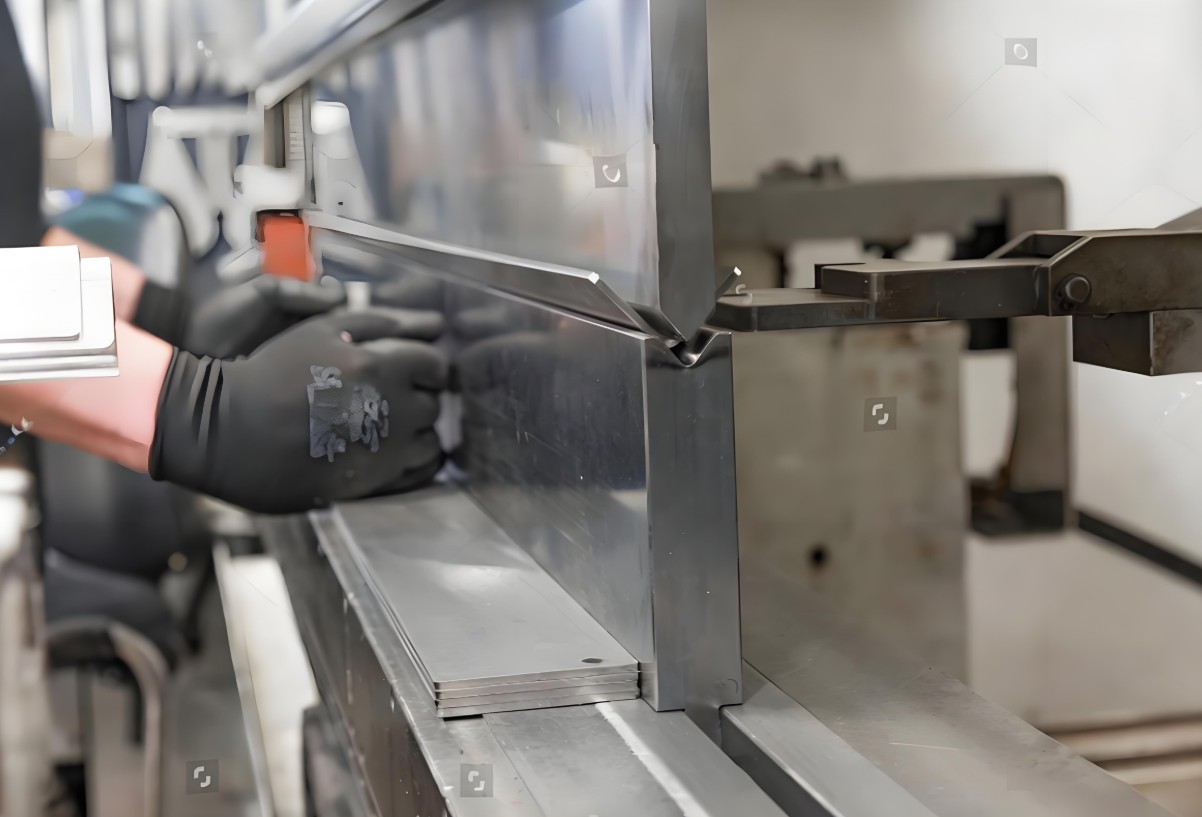
Material type (steel, stainless steel, aluminum, alloys, etc.): strength, ductility, springback, and hardness all change how much force and what tooling are required.
Bending equipment: the tonnage or force capacity of a press brake or folding machine; whether it is manual, hydraulic, or CNC.
Bend radius and angle: thicker material requires larger radius bends to avoid cracking or excessive springback.
Die and tooling configuration: V-opening size, lower die support, punch shape, and clearance.
Part geometry and feature spacing: flange lengths, proximity to edges or holes, and features like hems or ribs can limit how thick a piece can be bent successfully.
| Material | Approximate Maximum Thickness for Bending | Notes |
| Carbon Steel (standard, mild steel) | Up to 12 mm (~0.47 in) in general shop settings for common bending (90° bends, reasonable V-die openings) [1] | Heavier thicknesses possible with high tonnage CNC press brakes and large V-die widths. |
| Stainless Steel | Up to 10 mm (~0.39 in) in many fabrication settings for 90° bends | Requires careful tooling and larger bend radii; springback is more significant. |
| Aluminum | Up to 12 mm (~0.47 in) for many aluminum grades in production using press brakes or stamping dies | Aluminum is more ductile, so bending is easier, but thickness+bend radius+heat treatment matter. |
| Very Thick/Specialty Materials | 20 mm and above in rolling or specialized forming, such as plate rolling or heavy plate bending [2] | Typically not sheet metal bending in the usual meaning, more like plate forming or rolling rather than press-brake bending. |
Manual or small press brakes: these are typically limited to thinner gauges. For example, under ~4–6 mm depending on material type.
Hydraulic/CNC press brakes: can handle much thicker materials depending on tonnage. For example, in mild steel, some press brakes are specified to bend up to ½-inch (≈12.7 mm) or more in plate form, given enough force and appropriate die geometry. [3]
Rolling or forming machinery: for curved or cylindrical features (roll bending), thicknesses can go much higher (20-50 mm+), but this is outside typical sheet metal bending definitions.
As a rule of thumb, many shops consider 6 mm (~0.24 in) a practical maximum for sheet metal bending, especially for standard steel, with common press brakes without requiring overly large dies or specialized setups. [4] For 90° bends, plates over ~10-12 mm require much more force and likely custom tooling. Minimum inside bend radius tends to scale with thickness, often equal or greater than material thickness for many metals, to avoid cracking.
MAXTECH CNC can bend metal sheets up to 10 mm thick, depending on the type of metal, as part of their sheet-metal bending services. We can also handle very thin sheets, with a minimum thickness around 0.5 mm.
For common sheet metal bending (90°, using press brakes), 10-12 mm is a realistic upper threshold for steel and aluminum in many shops. Stainless steel tends to have similar or slightly lower practical limits. Beyond that, bending becomes more like plate forming or rolling, needing heavy machinery.
Reference:
[1] https://247tailorsteel.com/en/submission-guidelines/guidelines-for-bending
[2] https://www.komaspec.com/about-us/blog/guide-to-sheet-metal-bending/
[3] https://shop.adhmt.com/press-brake-metal-thickness-guidelines/
[4] https://www.xometry.com/resources/sheet/sheet-metal-bending/