Contact Us
REQUEST A CNC OR STAMPING SERVICE QUOTE FROM OUR EXPERTS TODAY!
Upload files ( Max file size: 20MB )

In today’s manufacturing world, aluminum metal stamping has become an indispensable technique for producing lightweight, high-volume, cost-effective parts across multiple industries. Whether for automotive body panels, electronics housings, or appliance components, stamped aluminum offers excellent strength-to-weight ratio, corrosion resistance and design flexibility.
Aluminum stamping encompasses a variety of forming operations that convert flat aluminum sheet or coil into finished parts. The core steps include blanking, piercing, drawing, forming and flanging.
Blanking: Cutting or shearing of an aluminum sheet into blanks that match the basic outline of the part.
Piercing/punching: Creating holes, slots or cutouts using a punch and die. This process is efficient for feature creation better than drilling for many stamped parts.
Drawing/deep drawing: A tensile form operation where the blank is stretched into a die to form a cup or complex shape. Aluminum’s formability makes it suitable for deep drawing in many cases.
Forming/flanging/embossing: Additional operations such as bending flanges, embossing patterns, or forming structural features. For example, flanging creates edges on aluminum parts used for joining or reinforcement. [1]
Throughout the process, special considerations must be made for aluminum’s characteristics, such as spring-back, tooling clearances, and lubrication. Aluminum creates a natural oxide layer and due to its softer nature compared to steel, stamping tooling needs to account for different wear and formability patterns. [2]
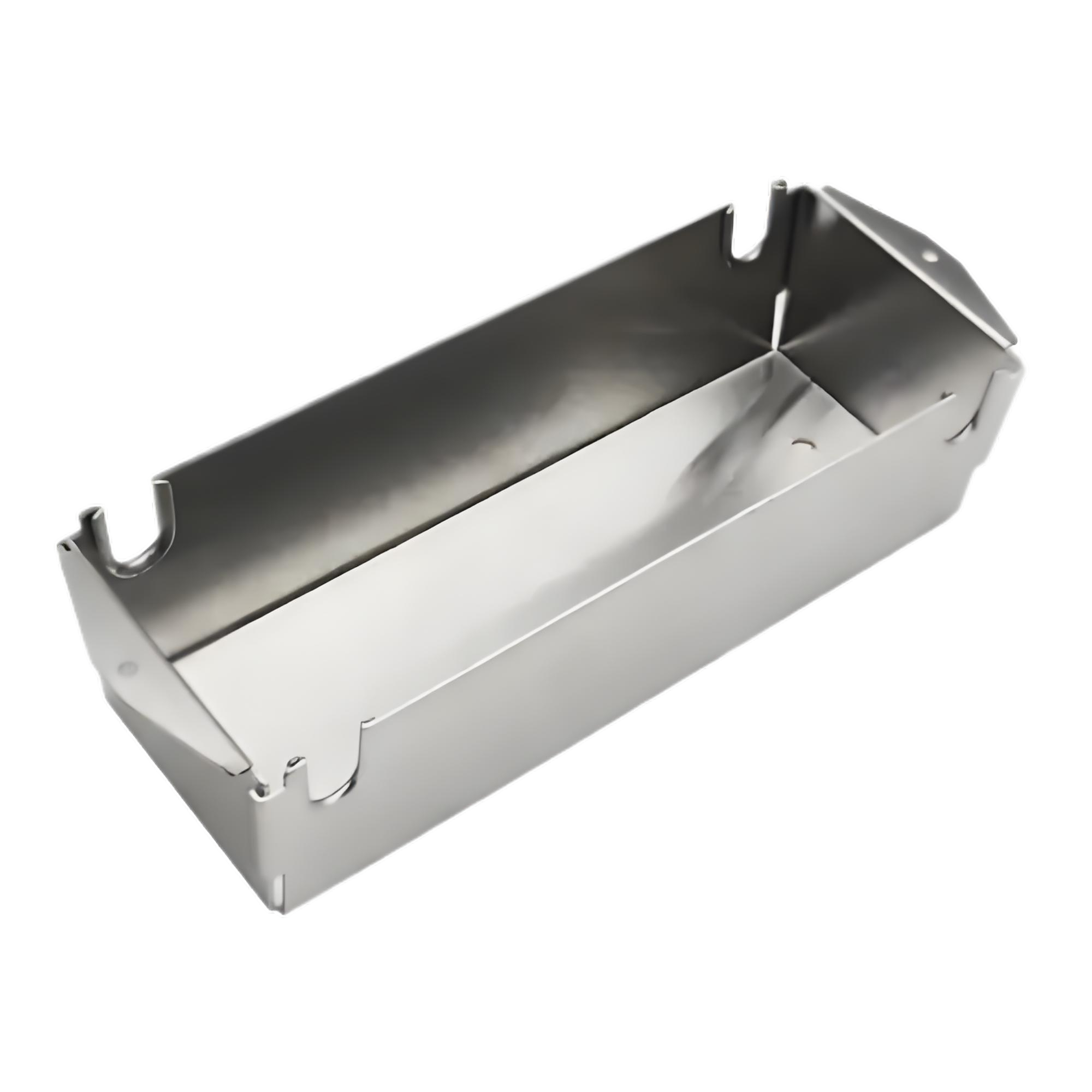
Selecting the correct aluminum alloy is critical for a successful stamping project. Different grades offer varying balance of formability, strength, corrosion resistance and cost. When choosing the grade, manufacturers consider the intended application, required strength, forming complexity, finish requirements and cost. Below are commonly used grades for aluminum stamping.
Commercially pure aluminum (≈99%). Excellent workability and corrosion resistance, highly formable. Ideal for decorative or deep-draw applications. [3]
Aluminum-manganese alloys. Good strength, excellent formability, widely used for non-structural parts.
Aluminum-magnesium alloys. High strength for non‐heat‐treatable aluminum, very good corrosion resistance, often used in transportation or marine applications.
Aluminum-magnesium-silicon alloys, heat-treatable, strong, good weldability and common in structural applications.
Aluminum-zinc alloys. Very high strength, used in aerospace or high-stress structural components, though more challenging to form.
Stamped aluminum parts are used across a broad range of industries due to the metal’s beneficial properties: lightweight, corrosion resistance, and high production repeatability.
Automotive: Aluminum stamping is used for body panels, brackets, heat shields and lightweight vehicle components to enhance fuel economy and reduce emissions.
Electronics: Housings, heat sinks, frames and connectors can be formed from aluminum stamping for miniaturized and lightweight electronic devices.
Home Appliances: Aluminum stamped parts are common in air-conditioners, refrigerators, kitchen appliances due to corrosion resistance and ease of finishing.
Construction and Architectural: Aluminum stamping is used for metal panels, facades, structural components benefiting from both design flexibility and durability.
Aerospace and Marine: High-performance aluminum alloys are stamped into complex shapes for structural efficiency and weight reduction.
When selecting an aluminum stamping parts factory, you need a partner who understands materials, tooling, precision and volume scalability. Here is why MAXTECH CNC stands out:
Comprehensive Capabilities: From in-house tooling design and mold manufacturing to progressive die stamping and post-processing, MAXTECH supports the full chain for aluminum stamped parts.
Material Expertise: MAXTECH works across aluminum grades from highly formable alloys to high-strength structural grades, giving flexibility for different industries and designs.
Quality & Precision: Equipped with advanced inspection systems and high-speed presses, MAXTECH delivers tight tolerances and consistent high quality in high-volume production.
Industry Versatility: Serving automotive, electronics, appliance, construction and aerospace clients, MAXTECH understands application demands and regulatory requirements.
One-stop Service: Beyond stamping, MAXTECH provides finishing, like anodizing, powder-coating, assembly and logistics support, reducing your vendor count and lead time.
Cost-effective Solutions: With optimized tooling, efficient production and global supply chain experience, MAXTECH helps reduce per-piece cost and shorten time to market.
Whether you require prototypes or high-volume production, MAXTECH CNC offers the engineering, manufacturing and service infrastructure to deliver premium aluminium stamped parts.
Aluminum metal stamping offers a powerful combination of lightweight performance, design flexibility and high-volume manufacturing capability. By selecting the right alloy, using proper stamping techniques and partnering with a capable supplier like MAXTECH CNC, you can realize efficient production of high-quality aluminum parts for a wide range of industries. If you have a new design or require stamping support, reach out to MAXTECH CNC to explore how we can help deliver your next project.
Aluminum metal stamping is a manufacturing process where flat aluminum sheet or coil is transformed into specific shapes using dies and presses, creating features such as holes, bends, flanges and drawn cavities.
Yes. Aluminum offers an excellent strength-to-weight ratio, good formability in many alloys, corrosion resistance and recyclability, making it a strong choice for many stamping applications.
Grades such as 1100, 3003, 5052 and 6061 are frequently used because they balance formability, strength and cost. The right grade depends on part geometry, volume and application.
Industries include automotive, electronics, appliances, construction, aerospace and marine—all leveraging aluminum’s lightweight and corrosion-resistant properties.
Key criteria include materials expertise, tooling capability, production capacity, quality control systems, finishing options and ability to scale from prototype to high volume.
Yes. After stamping, aluminum parts can undergo anodizing, powder coat, painting, laser engraving or plating to improve aesthetics, corrosion resistance and functionality.
References:
[1] https://www.sogaworks.com/blogs/aluminum-metal-stamping/
[2] https://kdmfab.com/aluminum-stamping/
[3] https://www.hlc-metalparts.com/news/aluminum-metal-stamping-81660466.html