Contact Us
REQUEST A CNC OR STAMPING SERVICE QUOTE FROM OUR EXPERTS TODAY!
Upload files ( Max file size: 20MB )

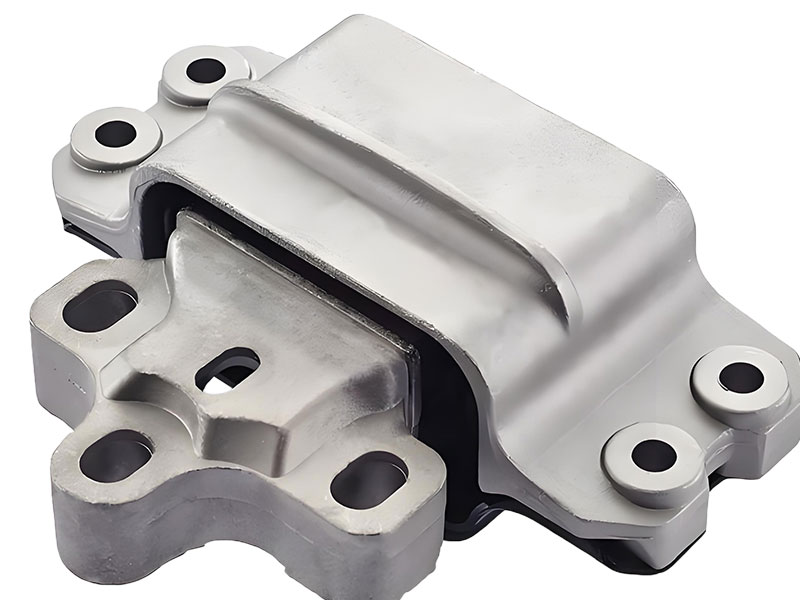
MAXTECH is a leading designer and manufacturer of high-quality machining automotive parts, specializing in providing durable and precision engineering parts for global automotive manufacturers. Our latest collaboration with commercial vehicle innovator TNSS Automotive provides customized transmission brackets: fixing the transmission to the core structural components of the vehicle chassis, absorbing vibrations and ensuring alignment with the engine and transmission system. As a key component of the powertrain, the transmission bracket requires excellent strength, dimensional accuracy, and durability; With decades of expertise in automotive manufacturing and advanced production capabilities, we have overcome unique technological challenges and provided support for the launch of TNS Automotive's new car platform.
Transmission brackets operate under constant mechanical stress: they bear the weight of the transmission (up to 80kg for commercial vehicles), absorb engine and road vibration, and must withstand temperature fluctuations (-30°C to 120°C). The project with C Automotive presented key hurdles that required specialized solutions:
High Structural Strength Requirements: The brackets needed to support 3x the transmission’s weight (240kg load capacity) without deformation or fatigue—subpar strength would lead to bracket failure, transmission misalignment, and drivetrain damage.
Tight Dimensional & Alignment Tolerances: Ultra-precise tolerances (±0.03mm for mounting holes, ±0.05mm for overall dimensions) were required to ensure perfect alignment with the engine, transmission, and chassis. Misalignment would cause vibration, noise, or premature wear of drivetrain components.
Vibration Damping & Durability: The brackets needed to absorb high-frequency vibration (10–200Hz) to protect the transmission and chassis, plus endure 200,000+ km of road use without cracking or corrosion.
We tailored our manufacturing approach to balance strength, precision, and lightweight design, combining advanced technologies, high-performance materials, and strict quality control.
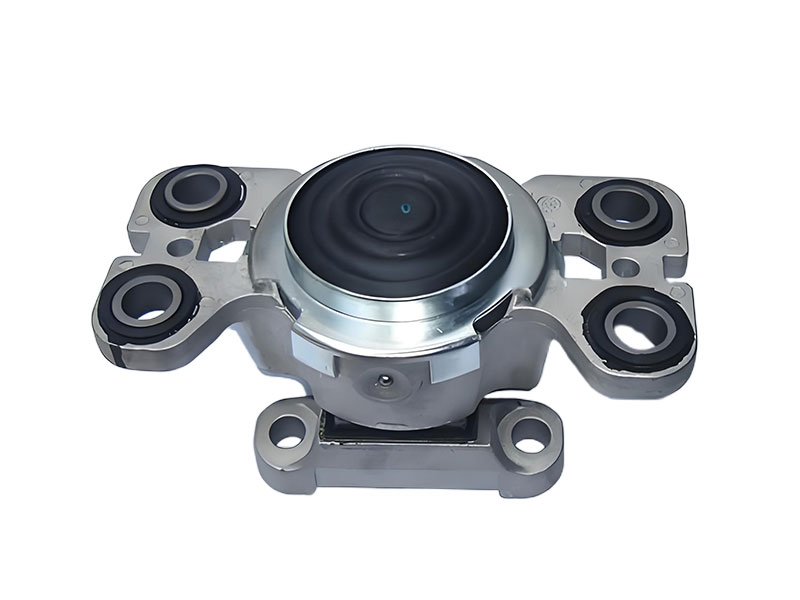
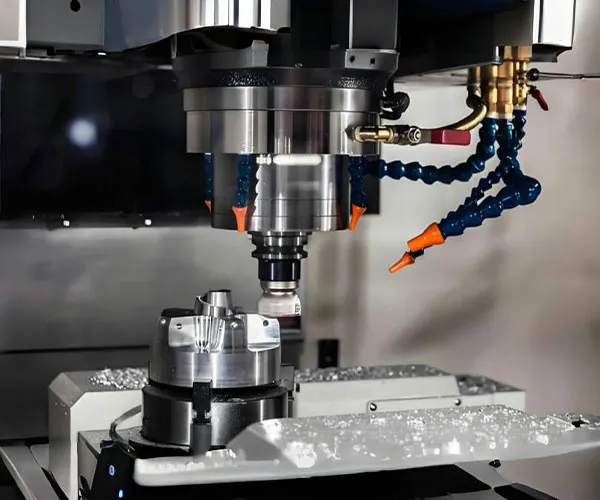
① CNC Machining (Primary Production Technology)
Application: Used for crafting the bracket’s complex structural geometry—including mounting flanges, reinforcement ribs, and precision holes. We deployed CNC milling centers with high-torque spindles (30 Nm) to achieve the ±0.03mm hole tolerance and ±0.05mm overall dimensional accuracy. Real-time on-machine inspection (laser probing) was integrated to validate alignment and dimensions during machining, eliminating rework and ensuring consistency across batches.
Rib Optimization: Specialized CNC toolpaths were designed to machine reinforced ribs at critical stress points, enhancing load-bearing capacity while minimizing material usage (supporting the 15% weight reduction goal).
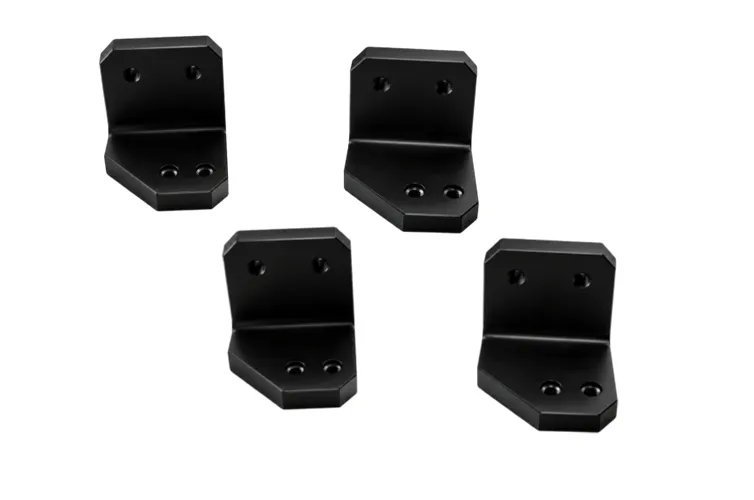
② Sheet Metal Fabrication (Secondary Structural Components)
Processes: Laser cutting (for flat bracket bases) and precision bending (for forming structural flanges) were used to produce lightweight yet rigid components. Laser cutting ensured edge precision (±0.02mm), while bending was performed with CNC press brakes to maintain structural integrity without material fatigue.
Welding: Automated TIG welding was used to assemble multi-piece brackets, ensuring strong, uniform joints that meet AWS D1.1 automotive welding standards.
Tailored treatments to enhance corrosion resistance, vibration damping, and durability:
Finish Type | Applicable Materials | Key Benefits | Thickness |
Powder Coating | Aluminum/Steel | Resists corrosion, impact, and temperature fluctuations; matte/gloss finish | 0.1–0.15mm |
Anodization | Aluminum | Enhances surface hardness; improves wear resistance; customizable color | 0.01–0.03mm |
E-Coating | Steel Components | Uniform anti-rust protection; adheres to complex geometries | 0.02–0.035mm |
Every material was selected for strength-to-weight ratio, durability, and compatibility with automotive environments:
Material | Applicable Technologies | Key Benefits | Application in Transmission Brackets |
Aluminum Alloy (6061-T6) | CNC Machining, Anodization | High strength-to-weight ratio; excellent machinability; corrosion-resistant | EV variant brackets (15% weight reduction vs. steel) |
High-Strength Steel (A36) | CNC Machining, E-Coating | Superior load-bearing capacity; cost-effective; durable for commercial vehicles | Gasoline/diesel vehicle brackets |
ISO Compliance: All processes adhere to All processes comply with ISO quality standards, with full documentation of material sourcing, machining parameters, and inspection results.
Dimensional Validation: Each production unit is inspected by fully automatic image measuring instruments and other measuring machines to verify alignment and tolerances, ensuring perfect fit with TNS Automotive's transmission system components.
“MAXTECH’s expertise in structural automotive components was pivotal to the success of our new vehicle platform. The transmission brackets they delivered not only met our strict strength and precision requirements but also exceeded our lightweight goals for EV variants—their aluminum alloy brackets were 17% lighter than our target, without compromising load capacity.
What stood out most was their attention to detail: the reinforced ribs machined into the brackets eliminated vibration in our testing, and the powder coating has held up flawlessly in corrosion trials.Their team’s willingness to iterate on rib design based on our stress analysis data made collaboration seamless.
We trust MAXTECH’s commitment to quality and innovation, and we’re excited to expand our partnership for future powertrain components.”
— Director of Powertrain Engineering, TNSS Automotive
ISO Certified: Rigorous quality control for safety-critical and structural parts.
Specialized Expertise: Decades of experience in transmission brackets
Comprehensive Capabilities: CNC Machining, Sheet Metal Fabrication and custom finishing—optimized for strength and precision.
Lightweight Solutions: Expertise in material selection and design optimization for EV efficiency.
Rapid Lead Times: low-volume production in 2–4 weeks.
24/7 Engineering Support: Fast quotation (within 24 hours) and real-time project updates.